

Looking at Everything from Different Angles: Interview with Artist Ken Perry
And a New Poll!

Have something you’d like to see in our newsletter — or in our newspaper?
Use this submission form!
New Poll: Debates
Yesterday’s post got a lot of views, probably because of the school election results, and in our most recent poll, 71% of you said you “always” vote in school elections. That doesn’t surprise us, as newspaper readers tend to be conscientious. All people running for office should advertise in newspapers — if they want to reach actual voters.
Speaking of candidates, we also had an article on the NY-21 Congressional race yesterday. It mentioned that the frontrunners on both the Republican and Democratic sides don’t want to debate their in-party opponents before the primary. What is your feeling on candidate debates?
Your votes in these polls are anonymous.
The Goods: Interviews With Local Artists
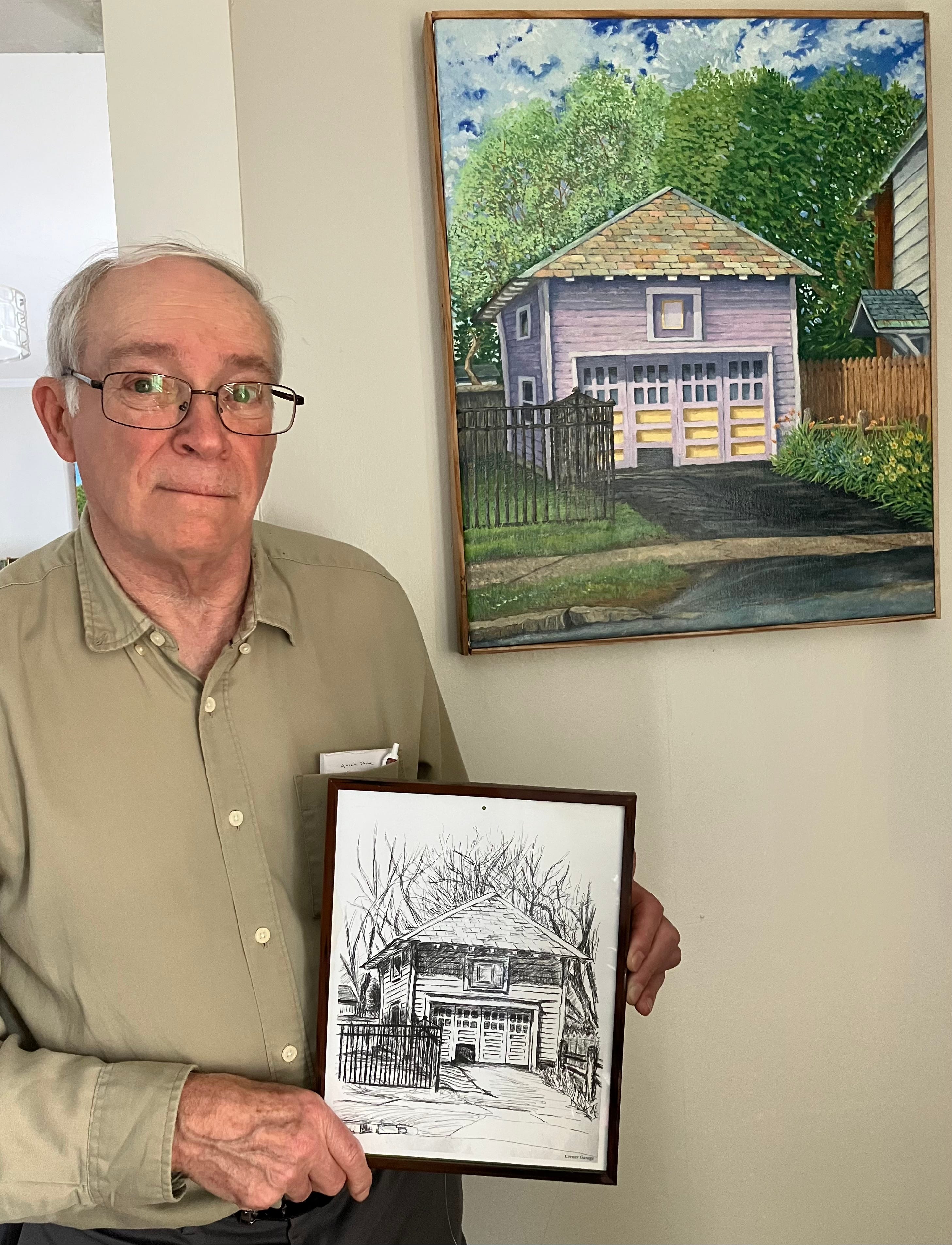
Looking at Everything from Different Angles: Artist Ken Perry
By Elizabeth Karp
Journal & Press
Excerpts from my conversation with Ken Perry at his studio in Greenwich, NY on April 14, 2026. Drawings in pen and pencil are dynamic with confident lines and oil paintings are comprised of meticulous brushstrokes and an exquisite sense of color. Perry’s perspective on Greenwich and the surrounding area, provide opportunities to see ordinary subject matter transform into extraordinary artworks. A feast for the eyes and imagination, Perry’s compositions invite the viewer to wander down sidewalks, gaze down driveways to see old carriage houses, study architectural details, and marvel at rolling countrysides.
EK: Who or what inspires your art making?
KP: I’m thinking a lot about Jan Vermeer and Vincent Van Gogh. I really like the handling that Franz Hals has of his paint. His is very, very flamboyant. You can see the brushstrokes. I use tiny little paintbrushes to create the effects I do. Also, Norman Rockwell. My grandparents had a secretary, and on the shelf they had some magazines, and one of them was a Saturday Evening Post with a Norman Rockwell painting on the cover. Growing up, I would always look at this drawing. About a dozen years ago, I went to the Norman Rockwell Museum where they have a gallery of Saturday Evening Post covers and I looked at the painting for the first time. The cover was from August of 1946. That magazine had been in my grandparents home for 14 years before I first saw it. On the landing to the stairway going upstairs, my grandparents had a big thick family Bible. I would look at all the illustrations. There were etchings from Gustave Doré, and all these classical artworks. So, those were really early connections.
EK: Tell me about how you’ve developed your artistic practice.
KP: I’ve always relied on pencils, ballpoint pens, and colored pencils. Oil painting came later. When other people were learning how to silk screen, I was doing everything by hand. Because I didn’t have the opportunity to do silk screening, I drew everything.
EK: That experience gave you the opportunity to develop your drawing skills.
KP: Oh, yeah.
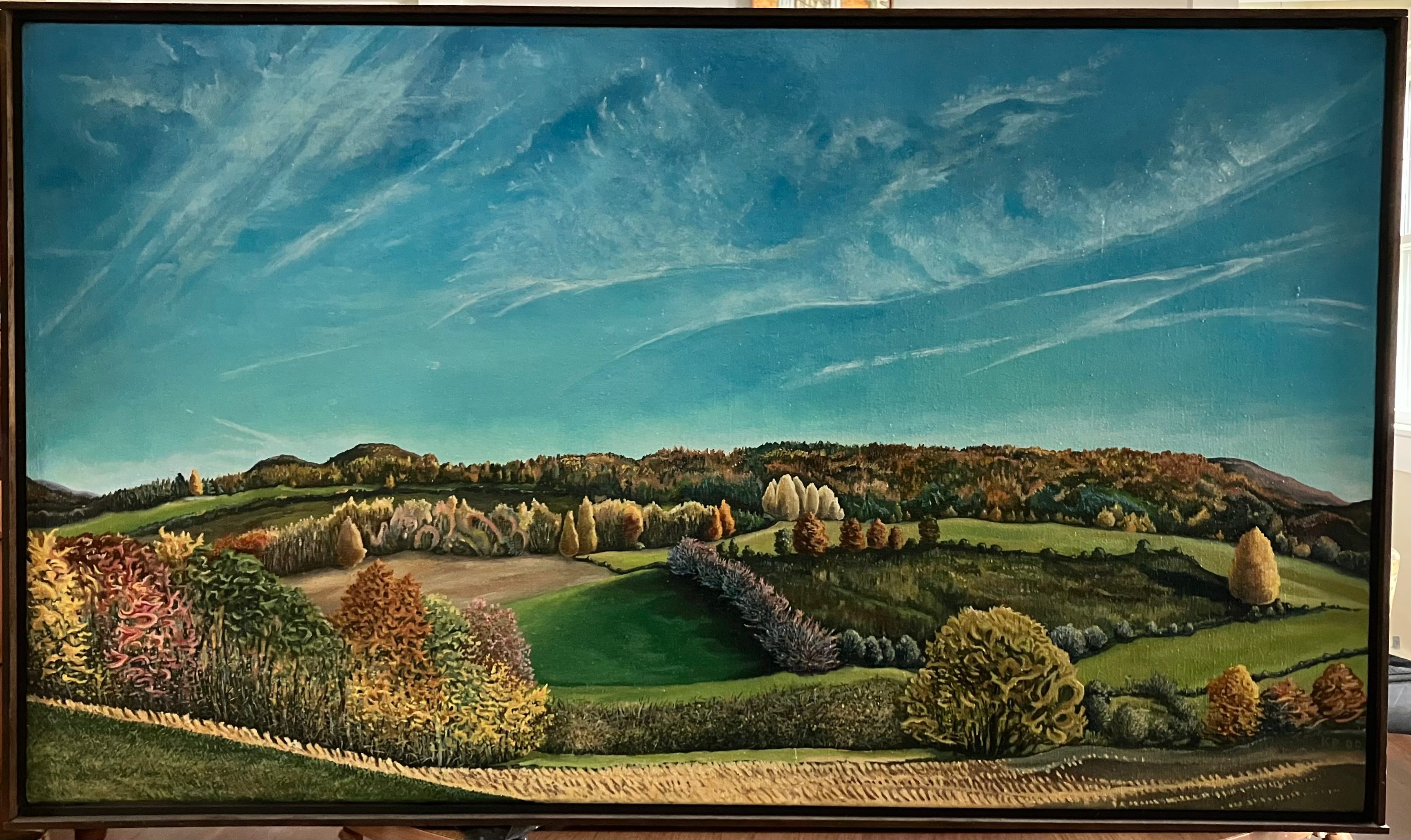
EK: How do you decide what to draw or paint?
RP: Perspective. Perspective, shadows, and shapes. Usually, I walk around neighborhoods and just scout at different times of the day to study light and shadow.
EK: You’re totally inspired by your neighborhood and surrounding community. That’s wonderful!
RP: Yeah.
EK: Talk about the importance of color and form and composition in your paintings?
RP: Well, black and white is really quite useful because it can show you texture, depth, dark and light. Color is a different thing because it creates shape. It’s more emotive.
EK: So you’re working in oil with glazes like the Old Masters building up layers?
KP: Not usually, but sometimes it works out that way. I build up layers of paint in certain areas and touch them up with different colors to add dimension and rhythm to the composition. Some people can start and work all the way through, but I don’t do that. I have to let paintings dry off before I can work on it again. I can work on a couple paintings at a time this way unless one of the paintings takes off and then I work all the way through on it.
EK: How do you use humor in your artwork?
RP: I like to make up titles that depend on non sequiturs or double meanings. My painting, “Blue Mournings at the Depot” is a good example because I spell it “mournings”, and when spoken it’s also saying “mornings.” I’m mourning the condition of this building.
EK: What is the most significant lesson you’ve learned as an artist?
KP: It [painting] will work out eventually. You know, you might not see it when you first started and sometimes, you have happy accidents. Or, sometimes you think a subject is a good idea and it doesn’t work out. And I think, well, I’ve gotten it out of my system. Or, you come back to it at a later point in time and you’re able to follow through.
EK: What advice do you have for painters?
KP: Keep looking. Keep looking. Look at everything from different angles.
EK: What role does art play in society, in your view?
RP: Well, so many people say that they don’t have any artistic skills, that they can’t draw. I don’t agree. You know, everybody has that potential. And even the appreciation of art by ordinary people is overlooked. Everybody wants to express themselves. I consider myself to be a working class artist chronicling the changes to village neighborhoods and rural landscapes.
EK: Where can folks see your work?
RP: Every Tuesday morning, I share a new drawing to an email list. Email me at kparthist2@yahoo.com if you want to be added to the weekly email. You can see my paintings at Green Art Supply, Greenwich, NY and in an upcoming exhibition at the Arkell Museum, Canajoharie, NY.
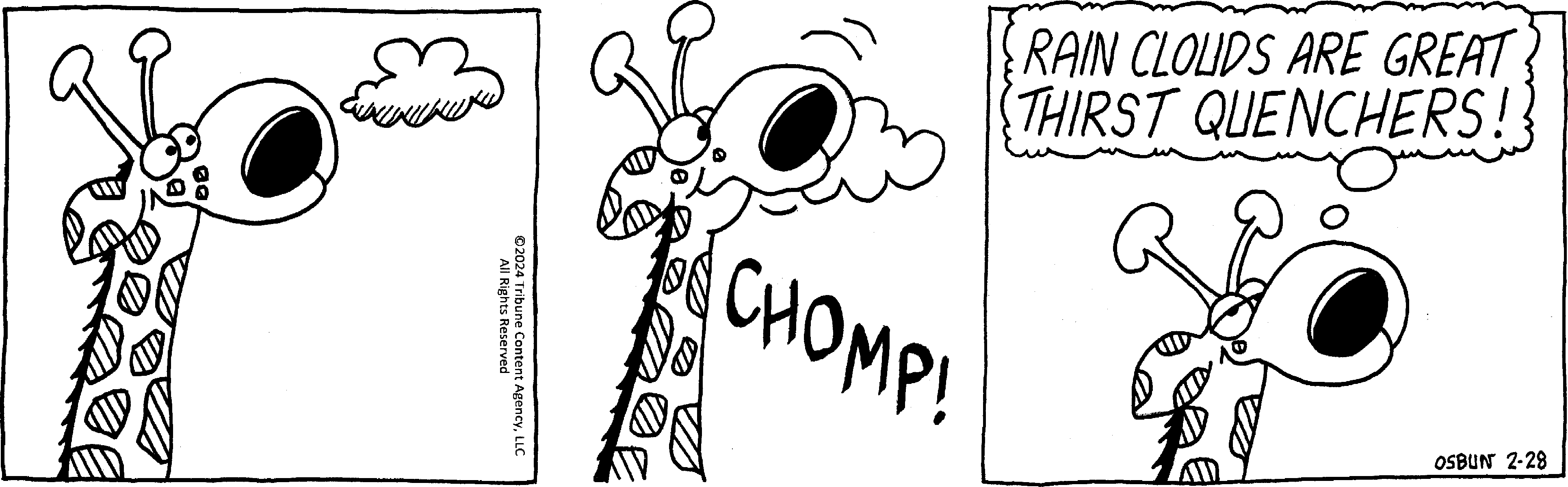
And Now for the Comics … ‘Animal Crackers’ by Mike Osbun
More tomorrow!