

Waymo to Consider
The Old Newbie Column

Let’s start off our Sunday with a brain teaser. Can you make a 7-letter word out of these letters? (<1 minute = great!; <2 minutes = very good; <3 minutes = OK! Answer at the end!)

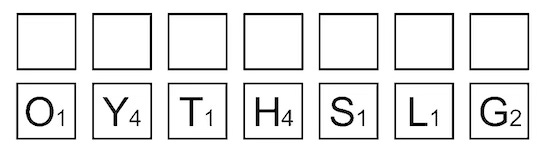
Hint: Mrs. Muir’s friend is this.
The Old Newbie Column
Waymo to Consider
By Eric Kufs
Journal & Press
“Waymo!” My wife shouted, before punching me in the arm.
It was Thanksgiving week. I was driving a beat-up 2018 Nissan Versa, borrowed from my old friend Doug, and we were in Los Angeles, on a vacation to our previous life. We were playing a new family car game we’d created, much like the punch buggy game we’d play as kids, when the first person to see a Volkswagen Beetle and call out “punch buggy” and the color of the car would lay a punch on the neighbor beside them.
Beetles were eventually discontinued in America due to the supposed dangers of a flawed rear engine design (many thought it might’ve been an auto industry conspiracy to kill the inexpensive and nearly indestructible car). I’m afraid to say it, but this won’t be the case for Waymo or other self-driving cars. If anything, we can likely expect the opposite scenario. They’ve been thrust upon us, the untrusting public, forced into cities by tech companies against our collective will.
Since we had landed in Los Angeles, we couldn’t help noticing the Waymos. We were sitting at a stoplight, startled by my daughter screaming from the back seat, “Wha!!” We turned to see her pointing out her window. “There’s no—there’s no one driving that car! That’s crazy!” We concurred. It was crazy. It IS crazy—or is it?
“Boom boom boom, let me hear you say Waymo!” I sang. “Waymo! Waymo!” My family resounded joyously. The response to my call was deeply satisfying. And then, as if the City of Angels (now the city of Waymos) had so imbued her with such spirit, my daughter, to the tune of Harry Belafonte’s classic “Day-Yo (The Banana Boat Song)” blared, “Waayyyy mo, me say Way-ay-ay mo!” This brought down the house. My wife and I cracked up. I’ve never been prouder of my child. But in truth, we were just delirious from severe jet lag. It was around that moment the yellow engine light came on, and the front end of our borrowed car started shaking while I fought through six lanes of traffic to get off the 405 freeway.
The next morning, the day before Thanksgiving, the second day of our trip, I had to bring my friend’s old Nissan to two different repair shops. The shop was a few miles from his apartment, where we were staying while he was out of town, so I needed to quickly decide how to get back to my family and start another day of being tourists in our former home. Is there a bus stop nearby? Can I call a cab? Do yellow cabs even exist anymore?
Should I figure out how to take a Waymo?
In fact, I still had the Uber app on my phone and within a few minutes, a white Lexus pulled up to the curb in front of the repair shop. My Uber driver, an older Japanese man, greeted me by name and asked me if I’d like a bottle of water, which I accepted even though we were no more than ten minutes from our destination. Within those ten minutes, I explained about being on vacation with my family, how I had lived in LA for over twenty years, that three years ago we had moved to upstate New York to have a better life.
After telling me about his two daughters, one a doctor, another a social worker, both living on the East Coast, we hit a bit of late morning brunch traffic and were stuck waiting for the light to change a few times.
“Not much has changed since I left.” In the rearview mirror I could see my driver, a polite gentleman, give a little laugh. “But I see all these Waymos. It’s crazy. I almost took one instead of calling you.” He said, “Only young people in their twenties, I see taking Waymo. Anyone in their forties or older, don’t trust it. They take Uber.”
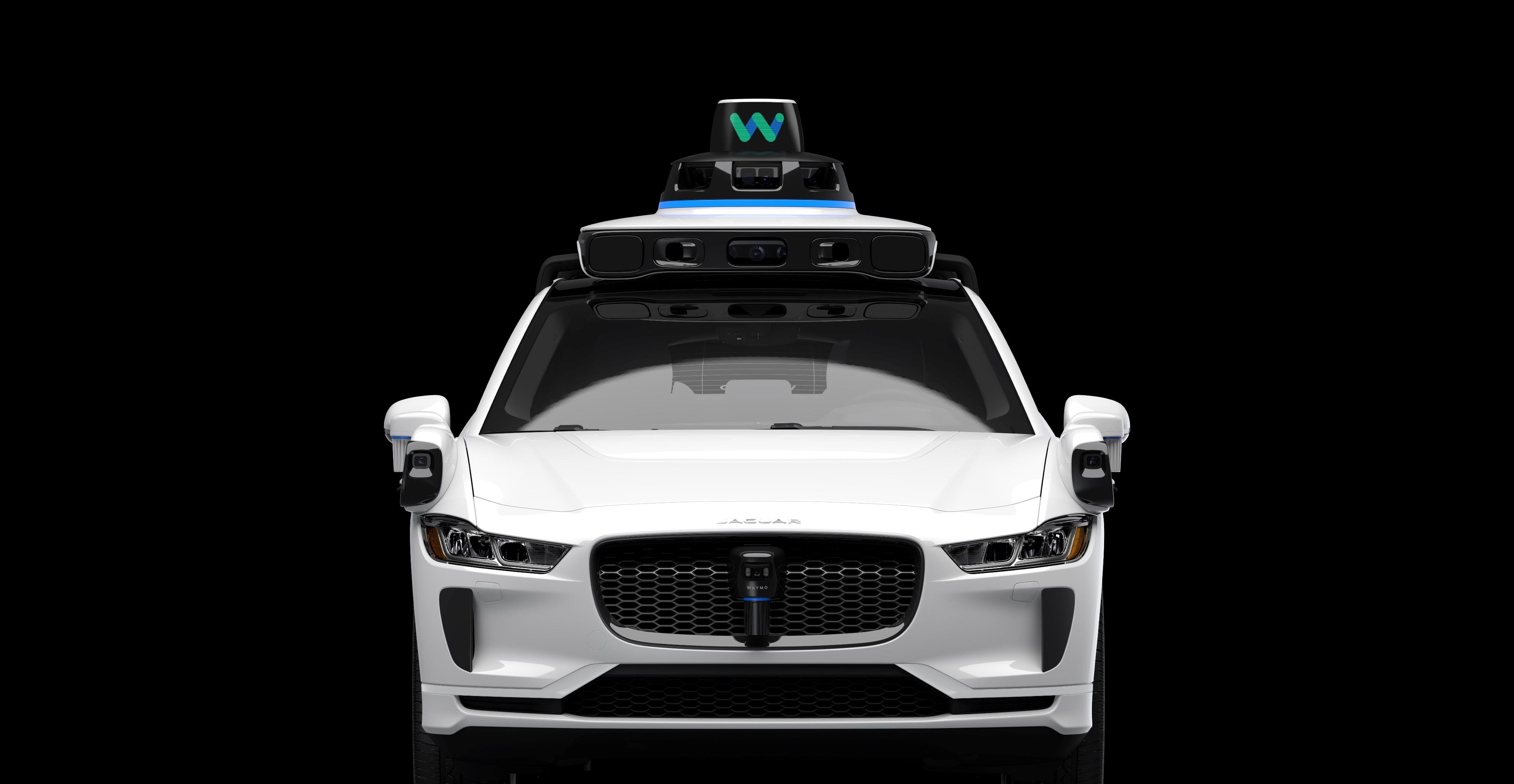
I thought about how many folks I know in Washington County, even the young high school kids I teach, have probably never been in an Uber, let alone a driverless car. While my expert driver cut through side streets to save us time, he told me each Waymo car costs $300,000 to build. Waymo, which is owned by Google, chose to use an $80,000 Jaguar SUV as its base model. There are so many cameras and technical gear attached to each of these vehicles, you’d think they would cut the cost somewhere. But as is often the case, costs both financial and human are nothing to companies who believe they are revolutionizing the modern world.
We talked about the prevalence of accidents with Waymos in the city. He told me there was one that happened downtown just last week. A lady got hit by a Waymo turning into an intersection. I wondered who you yell at when you get out of the car after an accident like that. Who do you exchange insurance with?
Later on, I Googled what happens in the aftermath of a collision with Waymo. The only thing I could glean for certain was that if you get into an accident with a Waymo, DO NOT sign anything, even if a police officer tells you to. You have rights, but not many. Your odds of winning a lawsuit against Google are slim.
Regardless of what makes us older folks uncomfortable about driverless automobiles, they are programmed and tested for safety and, with AI technologies, will be able to learn to handle all potential hazards on the road. And sadly, statistically speaking, most accidents with Waymos are largely caused by human error. “Google wants every car to be Waymo. So, it’s all safe,” said my Uber driver. As I opened my door to get out of the Lexus, I said, “Won’t that mean you’ll be out of a job?” He smiled and said, “Hopefully I’ll be retired by then.”
Later, while walking with my family to rent a compact SUV around the corner from Doug’s apartment, I thought more about the implications of Waymo. The teenagers I was substitute teaching in the heavy equipment class at BOCES the week before came to mind. They’d been bussed in from high schools all over Washington, Warren and Saratoga counties for vocational training. These young men had little use for traditional academic classes and were being trained to operate bulldozers, excavators, tractors, etc. Many were poised to find work in construction or maybe working on the farms surrounding Greenwich. Some were being trained to get their semi-truck driving licenses.
What were they going to do when all these machines became automated through AI? As a creative writer and teacher, I’ve been fixated on what things like ChatGPT will do to the art or necessary skill of written communication and critical thinking. But in this country, as in others, a real reckoning is underfoot if, as predicted within five to ten years, most manual labor, from manufacturing, to factory work, to truck driving, to washing dishes in a restaurant, is replaced by AI robotic technology. What will our relationship be to work, if we’re not needed to do anything as complicated as driving a car?
For those of you squawking away while reading this, I remember, seemingly overnight in Los Angeles, Uber overtaking and reinventing the taxi cab market, putting small companies out of business, so much so that local laws had to be implemented about who was legally allowed to drop people at the airport, to save the yellow cab and limo companies. Uber launched in Los Angeles in 2012. With the emergence of Waymo, it could be made obsolete within twenty years. That’s an objectively short amount of time.
This is what I was thinking about, when we arrived at the corner of Venice and Lincoln boulevards and I felt a little fist punch my arm. Startled, I heard my daughter shout, “Waymo!” as I looked up to see four of the driverless cars rolling through the intersection.

Eric Kufs is co-owner of Owl Pen Books, freelance writer, local teacher and musician. A Greenwich resident, he offers perspective as a transplant and relatively new member of the community.
And Now for the Comics…
Animal Crackers by Mike Osbun

The Middletons by Dana Summers

Broom Hilda by Russell Myers

And that Scrabble Answer:

More Tomorrow!
Aaaaah! Don’t put the hint so close to the letters!!