

Outdoors Tomorrow: Swooping Ravens and Smart Home Skunks
Clocks Spring Forward

Happy Sunday, March 8. Hopefully you “sprung forward” your clocks this morning. It might be later than you think!
A quick brain teaser and then our Outdoors Tomorrow column and some comics…
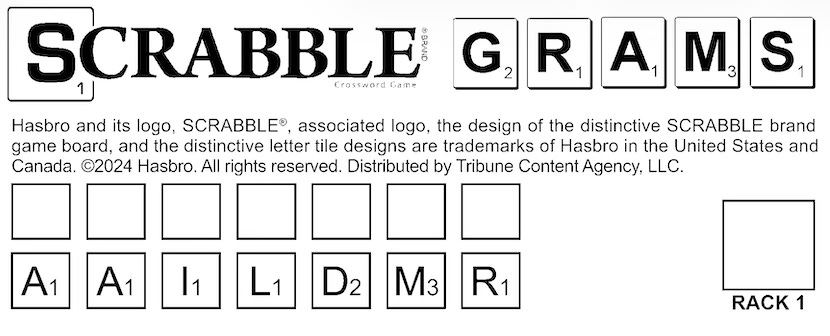
Can you solve this 7-letter anagram in 3 minutes or less? Give it a try! Answer at the end!
Outdoors Tomorrow
By Bob Henke
Journal & Press
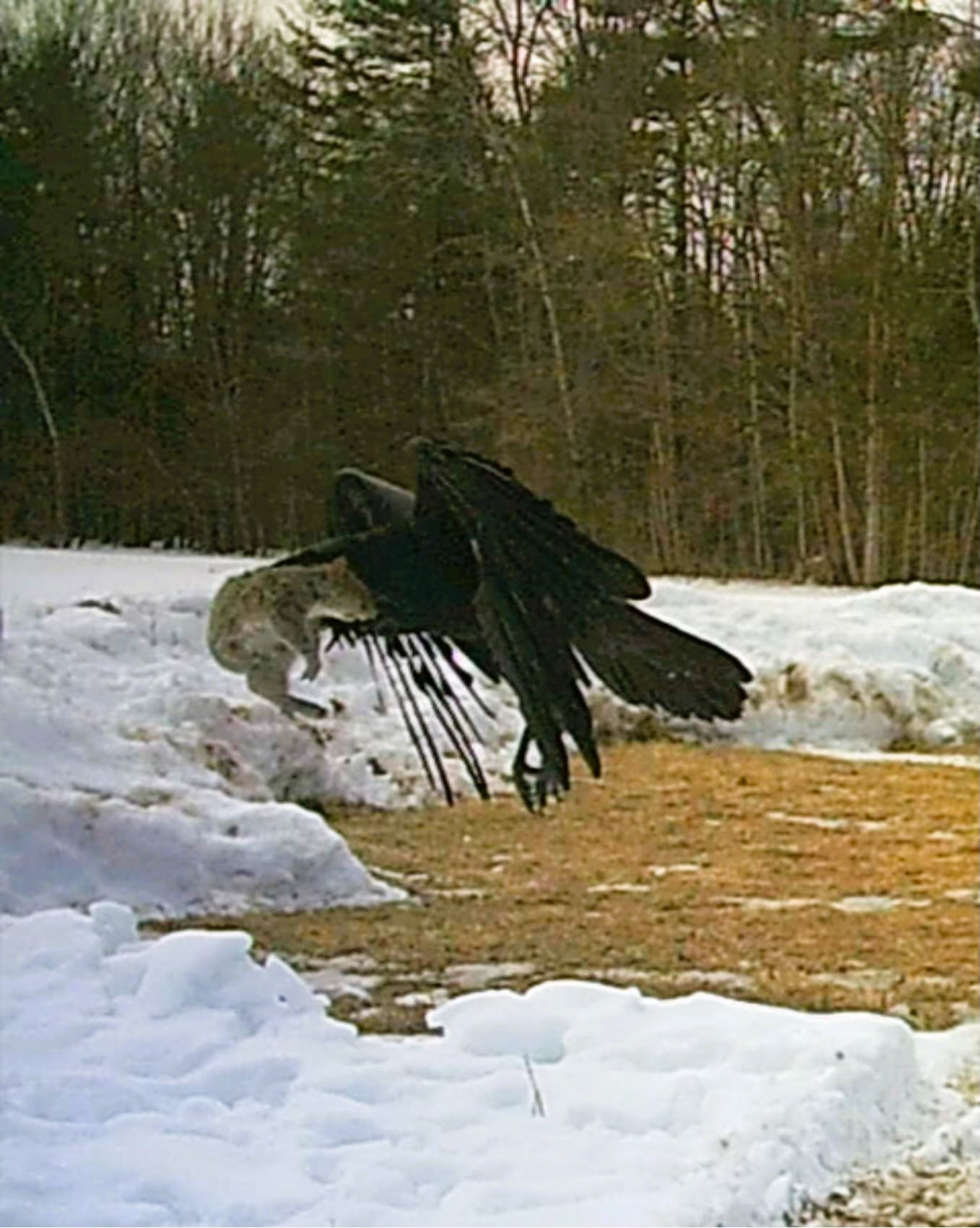
Smart Home Skunks
Folk initially enthused about having a “smart home” are now retrenching as these systems are increasingly being hacked. The latest iteration of home hacks have involved automatic vacuums. Instead of making passes and then returning to base to dump dirt and recharge, the hijacked appliances have begun chasing pets and toddlers while spouting expletives like a muleskinner at hitching time.
That is quite amazing but my favorite smart home hack takes over pet doors. When poor Sylvester tries to get in out of the night air, the door stays locked tight. However, if a skunk shows up, sniffing all the delicious odors, the door is flung wide. When Pepe Le Pew ventures inside, the door locks shut making sure he remains in the house for the homeowner to find.
The pet door issue came to mind again in a hugely different context, when I was having breakfast in New York City. Seated next to me was a group of Jewish clergymen engaged in intense conversation about affairs of state. I did not care about their sometimes loud expostulations but I was intrigued by their hats. The orthodox shtreimels I have seen in the past were uniform dark colored fur, often sable or fisher. Most of the ones at the table next to me were a striking black and white. I made a polite inquiry and was assured that, yes, it was skunk fur, specifically fur from the tail. Later, in a boring meeting, I checked the fur prices and determined that a skunk hide was bringing more than any other type of fur, around $75 apiece. This is good; it will give our ground-nesting birds and rabbits a break but interesting that a single change in human behavior can have such large environmental impact.
Our pungent local skunk, named the striped skunk for the pattern of its beautiful black and white coat, is actually pretty famous. The Fox Indians named a place on the southwest shore of Lake Michigan “She-gawk” meaning “place of the skunks.” We now know that place as Chicago (little has changed.) The Indians and early settlers not only used the skunk for food but treated many diseases with oil rendered from skunk fat. Skunk oil and musk is used today as a base for many perfumes, cosmetics, and household products.
The Striped Skunk is small averaging no more than 4 to 10 pounds with the males slightly bigger than the females. They are about 2 feet long from tip of nose to tip of very bushy tail. Skunks are digging animals and have very long claws on their forefeet. The major constituent of their diet is insects, which they locate with a very well developed sense of smell and good hearing. Their eye sight is lousy. The best of them can see no more than about 25 feet and the more myopic may not be able to pick you out at much more than 3 or 4 yards.
In the late Fall, female skunks may congregate in groups of up to 20 to enter a communal den where they sleep dormant for most of the winter. One male skunk, the most dominant in the area, will usually winter over in this den as well. This is the reason for the discomfiture of those hapless home owners who had skunk odor seeping through everything as the skunks set up shop under the house. Males often fight to determine who gets to stay in the den and who has to go sleep alone. When this process is over you may finally get everything aired out and say, “Aha! The skunks have left.” WRONG! Along about February, the females start coming in heat (something another skunk can detect several miles away,) the males that got kicked out in the Fall c try their luck again, and the odoriferous skunk rassles start again. This is also why some folks eschew the Pennsylvania woodchuck and figure the advent of Spring based on the first skunk killed on the highway. I have two friends, PC and Dudley, who are typically the first to report the event every year. This year, PC edged out Dudley with a smashed skunk in the Town of Argyle on Valentine’s Day. People are still reporting the same skunk although the state snowplow knocked poor Pepe clean across the town line into Greenwich.
When dominance gets sorted out, the victorious male mates with a dozen or so females and from 60 to 77 days later we have more skunks. The striped skunk is known for large litter sizes, averaging six kittens, so the dozen skunks under the porch can become 60 or 70 in very short order! In areas where trapping is not allowed, skunk populations can climb to disastrous levels very rapidly since they have very few natural enemies apart from Great Horned owls and automobiles.
Baby skunks are born blind and helpless, weighing about an ounce. They are able to hear at 23 days, open their eyes at about 28 days, and are fully capable of discharging musk at this time too. It is illegal in most states to descent a skunk and New York does not allow the transportation or possession of skunks taken from the wild. This is because they can harbor rabies for up to a year without showing symptoms although remaining contagious, making them quite a hazard to the family that might have one as a pet.
The skunk’s excellent adaptation to digging also does not endear them to homeowners. A skunk looking for grubs in the lawn can completely lay waste to a hundred square foot section overnight. Anyone attempting to dissuade the skunk from digging will find out in short order why they have few natural enemies!
The skunk has two scent glands, one on either side below the tail. When threatened, the skunk first gives warning by stamping its feet, backing up, and arching the tail. It may even balance on the forefeet like a gymnast. If the intruder does not go away the skunk contracts a powerful muscle that propels a fine mist of about 1 ounce of the thick yellow musk for up to 20 feet. In addition to the powerful odor, the musk contains an irritant, which burns the skin and can temporarily blind whatever was dumb enough to harass it.
The good news is that it quickly overwhelms our nasal receptors and within a few minutes we can no longer detect the smell. Janice used to be engaged in a skunk removal business. She was very good at it, capturing skunks from circumstances ranging from school yards to the interior of washing machines. She was careful and compassionate, getting sprayed only rarely. In these instances, however, by the time she got home, she could no longer smell it and felt all was well. Usually the kids would give the alarm - “Dad! Mommie is skunked and here she comes!” I would quickly lock the door and demand she strip entirely and hang her clothes in the spruce tree before entering the house. This was usually quite a battle since she could no longer smell the musk and suspected some ulterior motive.
Her business was brisk because there is no good way to dissuade skunks from taking up residence. The old remedy of spreading mothballs around is not effective and the mothballs themselves are quite toxic to children, pets, and birds. Sometimes a solution of ammonia and water spread around the entrance to a den will dissuade the skunk, but not often. The best course is simply to close up buildings tightly or learn to accept the skunk’s calling card. Skunks can take a great toll on young chickens, kittens, and garbage pails as well as their trademark cratering of manicured lawns. An electric fence, with the bottom wire no more than four inches from the ground, will keep this nocturnal visitor away but the need is continuous. Every few days, the skunk forgets all about his unpleasant encounter with fence and tries again. Each time it touches the fence, there is a monumental skunk event, so this solution is not recommended if you have neighbors.
But at least they will know it is Spring…

Contact Bob Henke with your sightings or questions by mail c/o The Greenwich Journal & Salem Press, by email at outdoors.tomorrow@gmail.com, on Twitter at @BobHenke, or on Facebook.
And Now for the Comics …
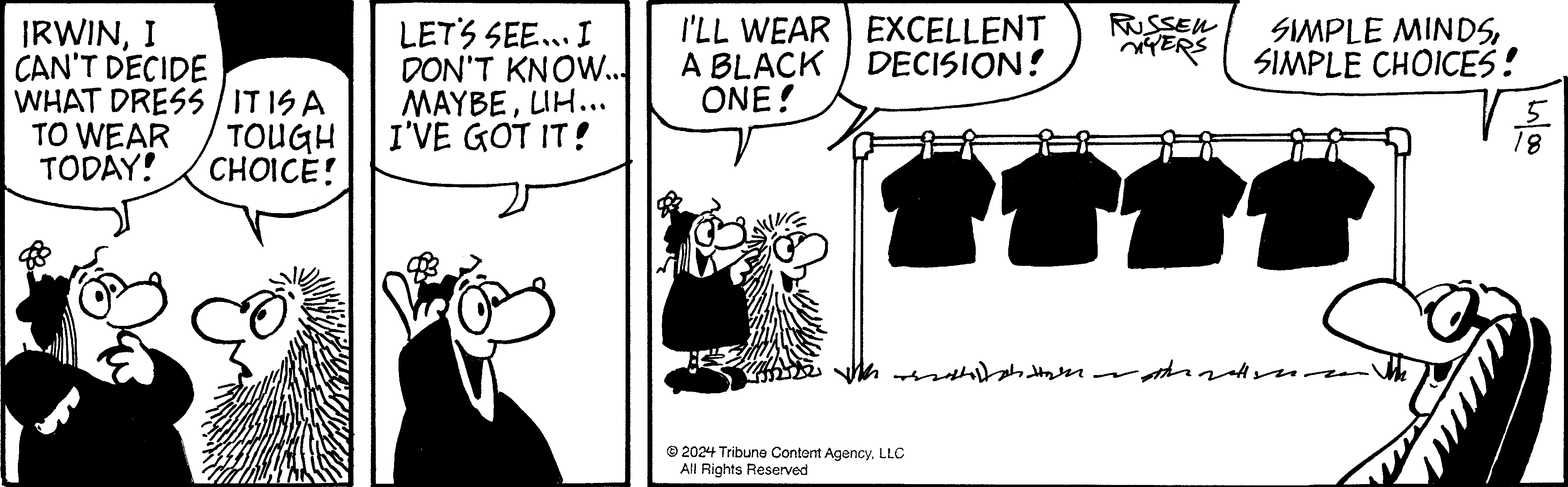
‘Broom Hilda’ by Russell Myers
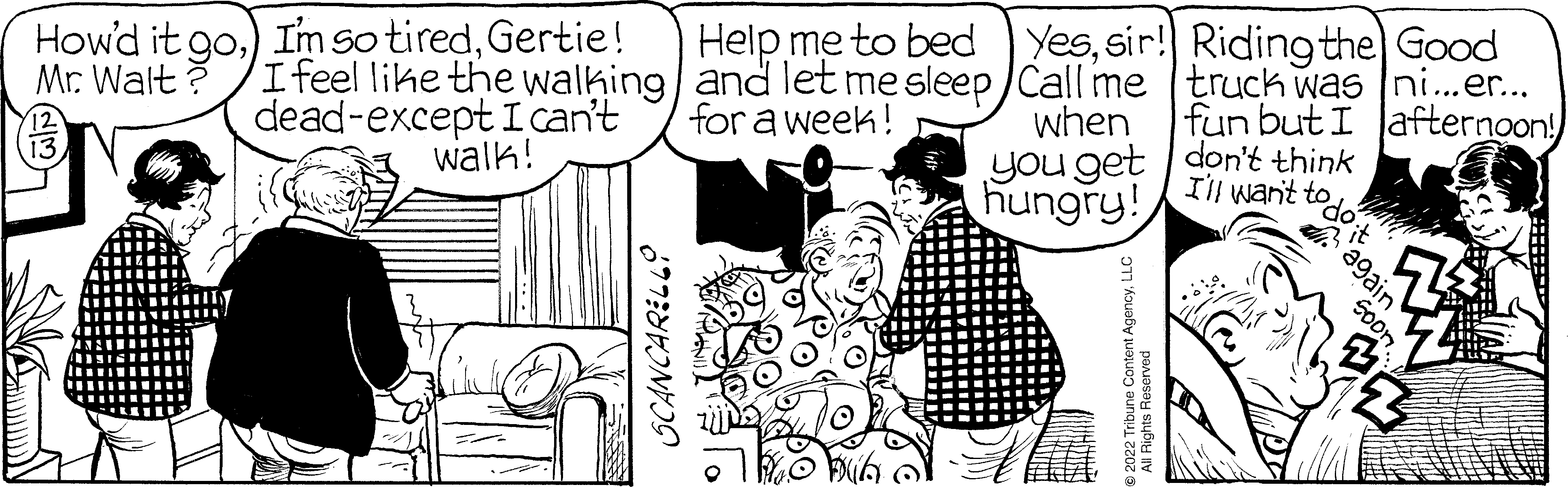
‘Gasoline Alley’ by Jim Scancarelli
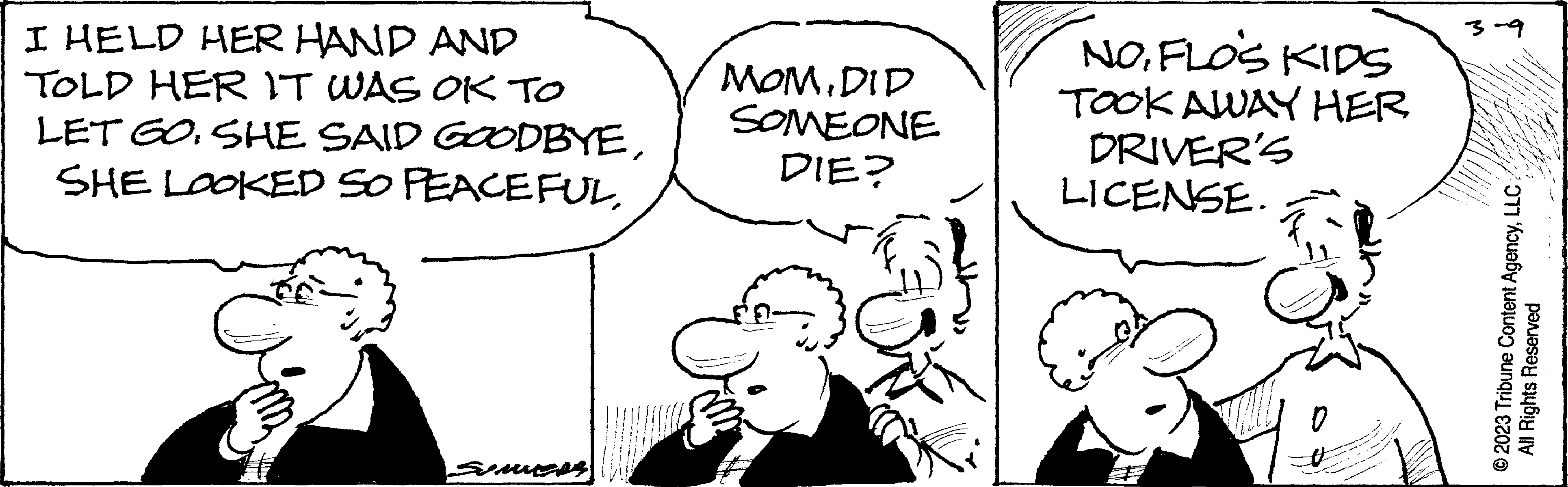
‘The Middletons’ by Dana Summers
‘Animal Crackers’ by Mike Osbun

Oh, yeah, that Scrabble answer…

More tomorrow!
I’m a little embarrassed to admit I took way too long with the scrabble word. My husband, with his military experience, got it almost instantly!