

Random Thoughts: Before There Were Drones, There Was Burleigh
And Be in Our 250th Special Edition!

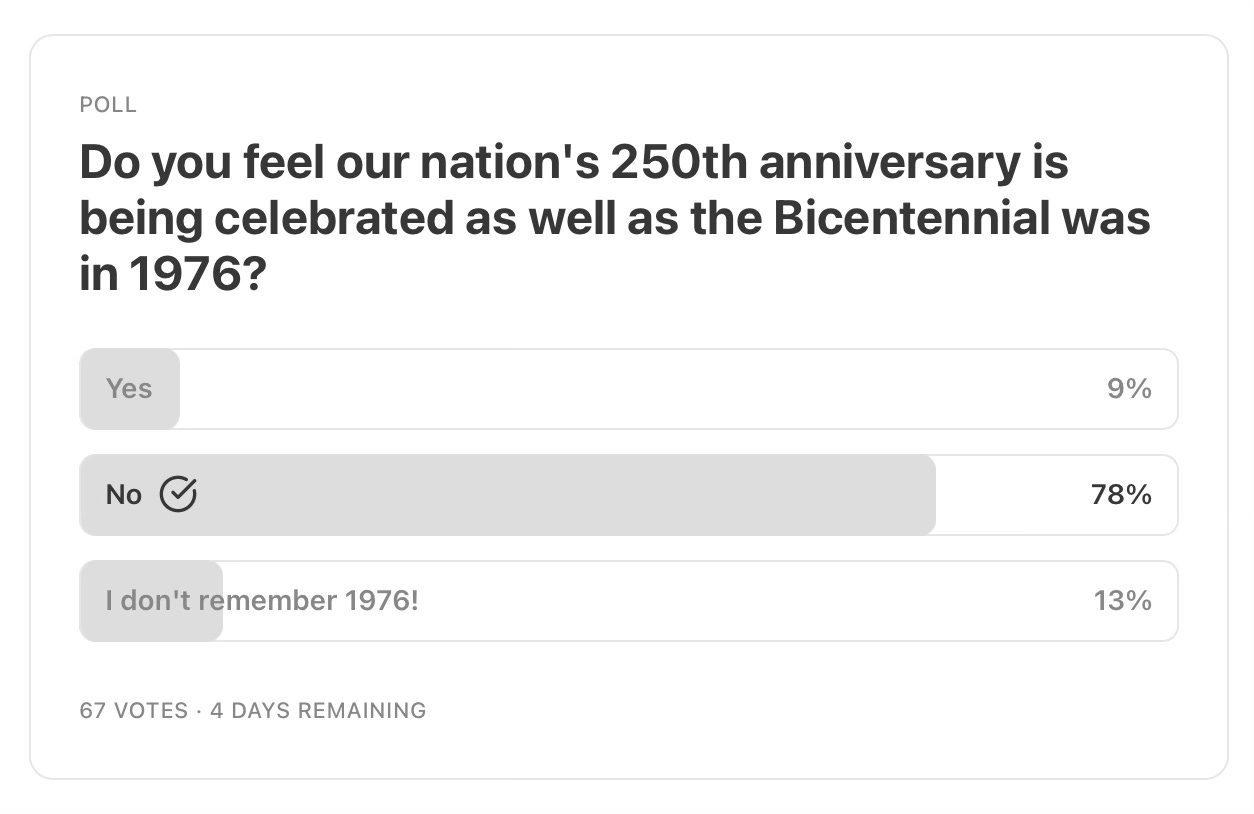
Catching up with a recent poll, it seems our readers are mostly old enough to remember 1976 and the patriotism back then for the Bicentennial, despite 1976 having hard economic times and being not well after Watergate and the Vietnam War … as compared to now, where it seems our institutions can’t get it together as well for the nation’s 250th.
That said, there’s still time for us to pull it together! Ultimate deadline is June 15 to be in our special 250th keepsake edition!
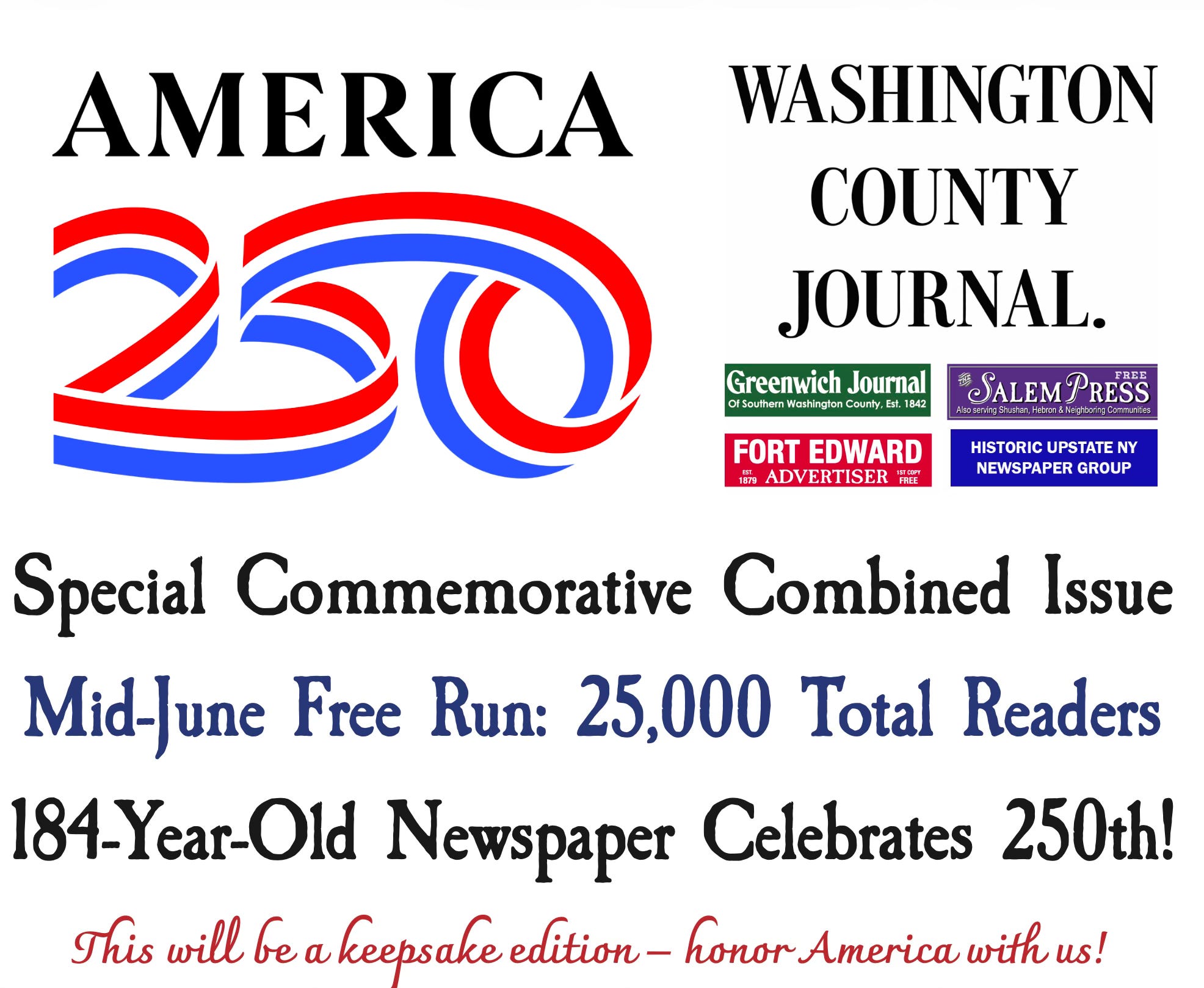
If you’d like to write for it or advertise in it, contact editor@journalandpress.com — or wait another 50 years for the 300th!
Here’s our cover from 1976…
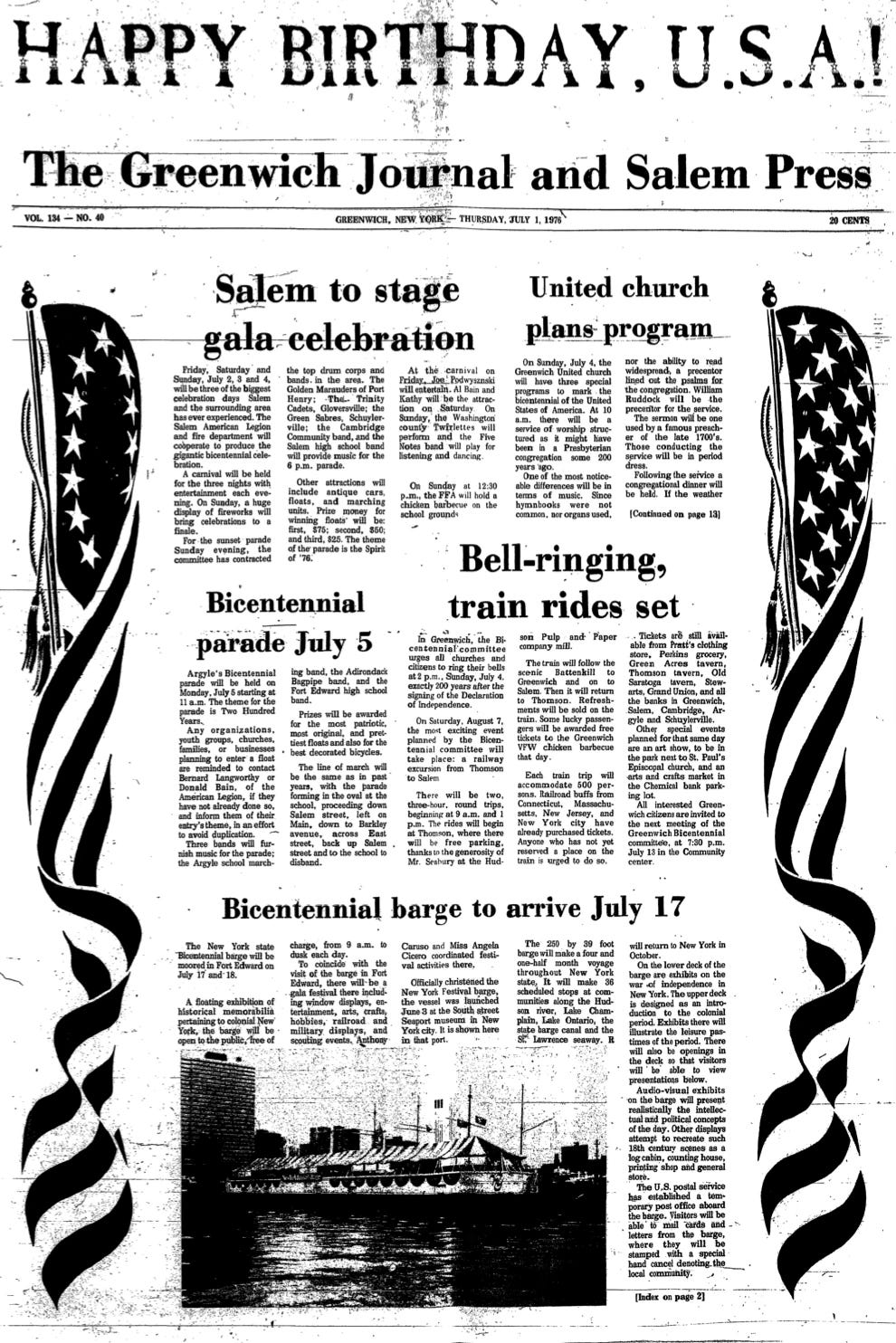
Our 250th will be like this, but with more modern design!
Send us your patriotic items and ads!
Random Thoughts: Before There Were Drones, There Was Burleigh
By Michael Levy
Journal & Press
Have you ever stopped to look, and I mean really look, at an old map? I don’t mean the gas station road maps we used to keep in the glove compartment, the ones that could never be refolded by any human once opened. I mean the “bird’s eye views” from the late 19th century, when cartographers weren’t just mapmakers but minor magicians.
I found myself staring at one the other day sold by Lucien Rinaldo Burleigh or L.R. Burleigh to the people who bought his prints. Between 1885 and 1890, Burleigh went on what can only be described as a map making binge. He produced low angle panoramic views of more than a hundred towns, mostly across New York and New England, each one drawn with a level of detail that borders on amazing.
What I can’t get over is how he managed it. Today, if you want a panoramic view of a town, you pull a drone controller out of your pocket, tap a button, and let the machine do the work. In the 1880s, Burleigh had no drone, no helicopter, and during his most productive years, not even a hot air balloon. What he had were his feet. He walked.
Imagine the nerve it takes to stand on a dusty street corner, look up at a two-story brick house, and confidently declare, “Yes, I know exactly what this looks like from a few thousand feet in the air at a thirty-degree angle.” Burleigh walked every street, counted windows, sketched rooflines, noted porches, and mentally stitched together the geometry of an entire town. Then he went home and drew the whole thing as if he’d been floating above like a FAA licensed pilot in an old Piper Cherokee. This man was calculating the perspective of an entire village from an imaginary cloud.
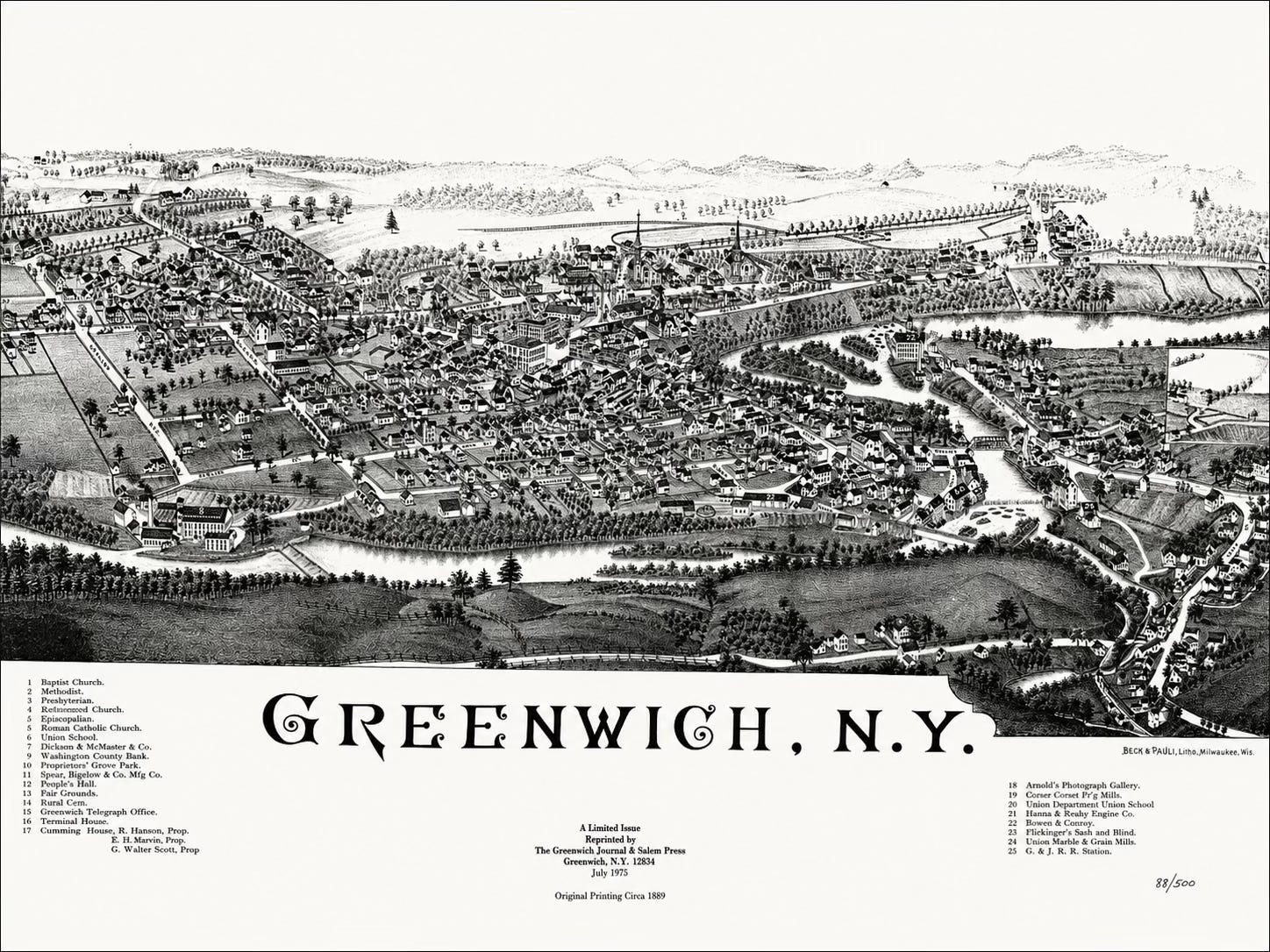
Take his circa 1889 map of Greenwich, New York. If you look at it today, it’s spectacular. He captures the village draped across the Battenkill, mills humming along the river, and a steam engine chugging across the tracks.
I wondered about how accurate these maps were. Surely, he must have taken some artistic liberties. Surprisingly, he didn’t. The street grid is remarkably faithful. Main Street, Academy Street, Salem Street, they intersect exactly where they should. Count the houses on a block in his drawing, and they almost always match historical records. The mills sit precisely where their foundations still rest along the river. For a man who never left the ground, he saw things with astonishing clarity.
That’s not to say he didn’t indulge in a little artistic generosity. Because he was drawing from a hypothetical vantage point, the depth perspective sometimes gets compressed. A hill might look a bit steeper or closer than it really is. And he had a habit of making every garden look like a horticultural masterpiece. But considering that the people who bought these maps were often the same people whose houses appeared on them, you can hardly blame him. You don’t sell maps by portraying someone’s backyard as a tangle of weeds.
And then there’s the printing process, which was no easier than the drawing. Once Burleigh finished his master sketch of Greenwich, he simply didn’t run it through a Xerox copier. He shipped it to Milwaukee. Why would a man working in Troy, New York, drawing a village in Washington County, send his work halfway across the country when there were perfectly good printers in Albany, Boston, and New York City? Because Milwaukee, in the late 19th century, was the Silicon Valley of German lithography. The city was full of German immigrants who brought with them the secrets of fine stone lithography. Beck & Pauli, the firm that printed many of Burleigh’s maps, were masters of their craft. They had massive presses and the expertise to transfer a delicate hand drawn sketch onto a three-inch thick, two-hundred-pound slab of Bavarian limestone.
The process blended chemistry with artistry. The artist’s drawing was recreated on the stone with tusche - either brushed on as a liquid ink or rubbed from a solid stick in a resist process. The stone was then etched with a mild solution of nitric acid and gum arabic, which fixed the greasy tusche image into the surface while rendering the rest of the stone water‑receptive. During printing, the dampened stone repelled ink everywhere except along those greasy lines, allowing the press to print a crisp, richly textured impression. The finished maps were shipped back east for Burleigh to sell.
It’s worth noting that, in addition to the maps produced by Beck & Pauli, some Burleigh views such as the 1887 Bennington panorama, were printed by his own company, the Burleigh Lithography Company at 361 River Street in Troy.
When you consider the limitations of his time, what Burleigh achieved feels almost miraculous. He gave ordinary people the chance to see their world from above, long before the Wright Brothers flew at Kitty Hawk. His maps come from a time when a man was willing to walk every inch of a town just to show us how beautiful it looked from the sky. They remind us that perspective isn’t always about altitude. Sometimes it starts with a random thought that sends someone on a path of artistry.

Michael Levy is a retired government manager residing in Greenwich, NY, and is employed now as a technical consultant. He is also a Commercial Pilot and a Ham Radio operator.
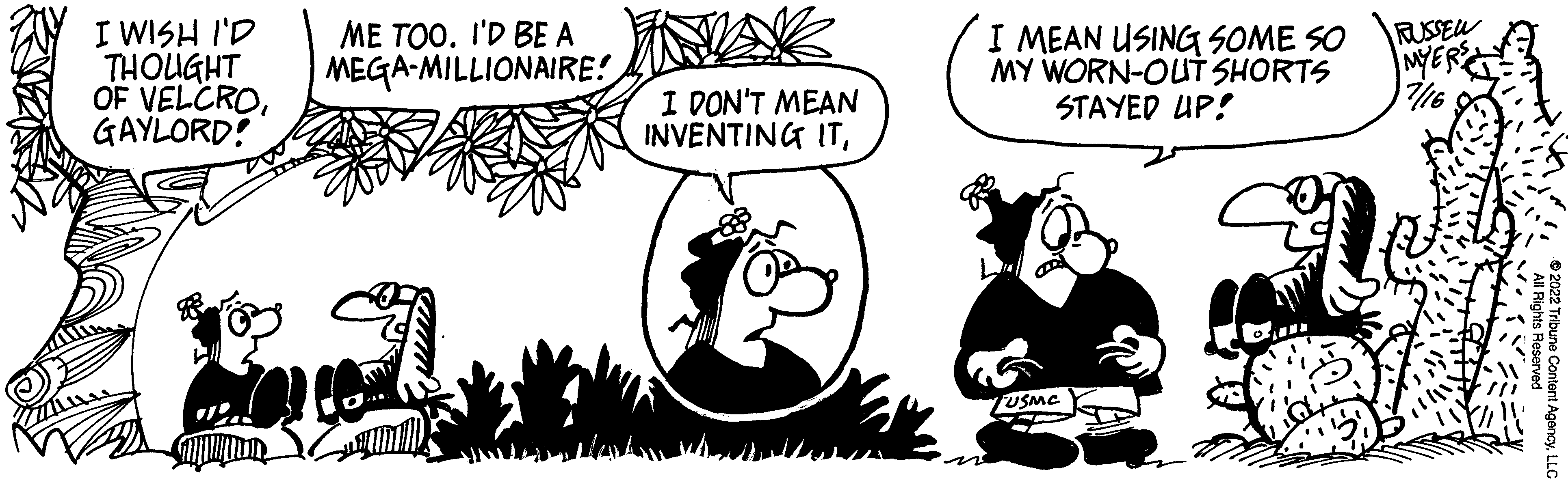
And Now for the Comics … ‘Broom Hilda’ by Russell Myers
More tomorrow!
I loved the column on Burleigh. Thank you, Mr. Levy!