

'O My Goodness!'
And Caregiver Event Today

We’ll start with a column by MaryAnne Brown, who is also expected to write something this weekend for Mother’s Day.
Speaking of Mother’s Day, Auction Barn reports they are sold out for that day, in part thanks to advertising in our newspaper — if you want traffic for your business, see our rate card and then wheel and deal with us!
Now a quick message from another sponsor — us!
We live in a county without a TV station, radio station or even a daily newspaper (unless you count this newsletter). No one has that one digital presence to capture the essence of the region on a regular basis, either (unless you count this newsletter). Yes, the future may be digital (and maybe this newsletter is it), but the backbone behind our digital effort is our print product. It organizes content, energizes our writers and reaches lots of people, many of whom don’t read this newsletter — or they just prefer print (like we do). Will you support the Rural Print Fund today?
And on to MaryAnne’s column…
In Good Faith: O My Goodness!
By MaryAnne Brown
Journal & Press
This is a phrase we often use without thinking—an exclamation that slips out in moments of surprise, frustration, even delight. “O my goodness!” we say. But what if, without realizing it, we are naming something true? What if we are calling attention to something already present—something quietly holy within us? What if goodness is not something we achieve, but something we carry?
In a world that often feels sharp-edged and hurried, it can be difficult to believe that goodness still lives at the center of who we are. The news tells a different story. Our daily interactions can sometimes reinforce it. Yet beneath the noise, there remains a quieter truth—a steady, enduring presence that does not disappear, even when it is overshadowed.
The late Marvin Hamlisch, an acclaimed composer and conductor whose music brought beauty and connection to millions, once said, “I still have great faith in what is good and right in all of us.” It is a simple statement, but not a naïve one. It reflects the kind of wisdom that comes from paying attention—listening closely enough to hear the harmony beneath the discord.
There is a practice in Denmark that offers a glimpse of what tending that goodness might look like. In Danish schools, students gather regularly for “Klassens Tid,” also known as “The Empathy Hour.” It is not a formal class. There are no tests or grades. Instead, it is time set aside for something both simple and profound.
Students sit together and take turns sharing real-life challenges—something troubling at school, something difficult at home, or something they are trying to understand about themselves or others. Their classmates listen—not to respond quickly or fix the problem, but to understand. Together, they reflect, offer support, and, when appropriate, help one another consider possible ways forward.
When there is nothing pressing to share, they simply enjoy “hygge”—a sense of calm, comfort, and togetherness that draws them closer. It is, indeed, a practice of presence. This empathy-centered approach also includes free play, where children learn cooperation, dialogue, and compassion. Students are encouraged to work together, focusing less on competing with others and more on growing alongside one another.
The results of this practice are striking: lower rates of bullying, stronger communication skills, and a deeper sense of belonging. More importantly, these young people are learning something foundational—that their voices matter, that their struggles are not theirs alone, and that listening—true listening—is an act of care.
Imagine if such a practice were not limited to classrooms in Denmark but found its way into the ordinary spaces of our lives—our homes, our workplaces, our communities, even the halls of leadership where decisions affecting so many are made. What if we made room for an “empathy hour” of our own?
Not necessarily sixty minutes set aside each week, but intentional, unhurried moments where listening becomes the primary act. Around a dinner table, we might ask, “What’s been on your mind lately?” and allow the answer to unfold without interruption. With a friend, we might resist the urge to offer quick advice and instead say, “That sounds really difficult. Tell me more.”
These small shifts can change the tone of a relationship. They create space where goodness can surface—where people feel seen, heard, and valued.
In our communities, we might begin to cultivate circles of belonging—places where each voice matters and where differences are not immediately judged but gently explored. In times of tension or disagreement, we might choose to trust that goodness lies beneath the surface, even when it is not immediately visible.
This is not always easy. It asks something of us. It requires patience in a culture that prizes speed, humility in a world that rewards certainty, and a willingness to be present when distraction is always within reach. Still, the invitation is simple: may we listen more than we speak, reflect before we respond and connect rather than correct. In doing so, we may rediscover something essential—about others, and about ourselves.
For those who live by faith, this goodness may be recognized as the imprint of the Divine, placed within us from the very beginning. For others, it may be understood as a shared human capacity—a quiet moral center that calls us toward compassion and care. However we name it, the invitation remains the same: to trust that something deeper is at work within us and among us.
The next time we say “O my goodness!” the phrase may mean something more. Rather than an expression of surprise, the words may become a quiet realization that goodness is still here, within us and among us, waiting to be noticed, nurtured, and shared.
Perhaps that is where we begin again, for in the words of Thoreau, “Goodness is the only investment that never fails.”
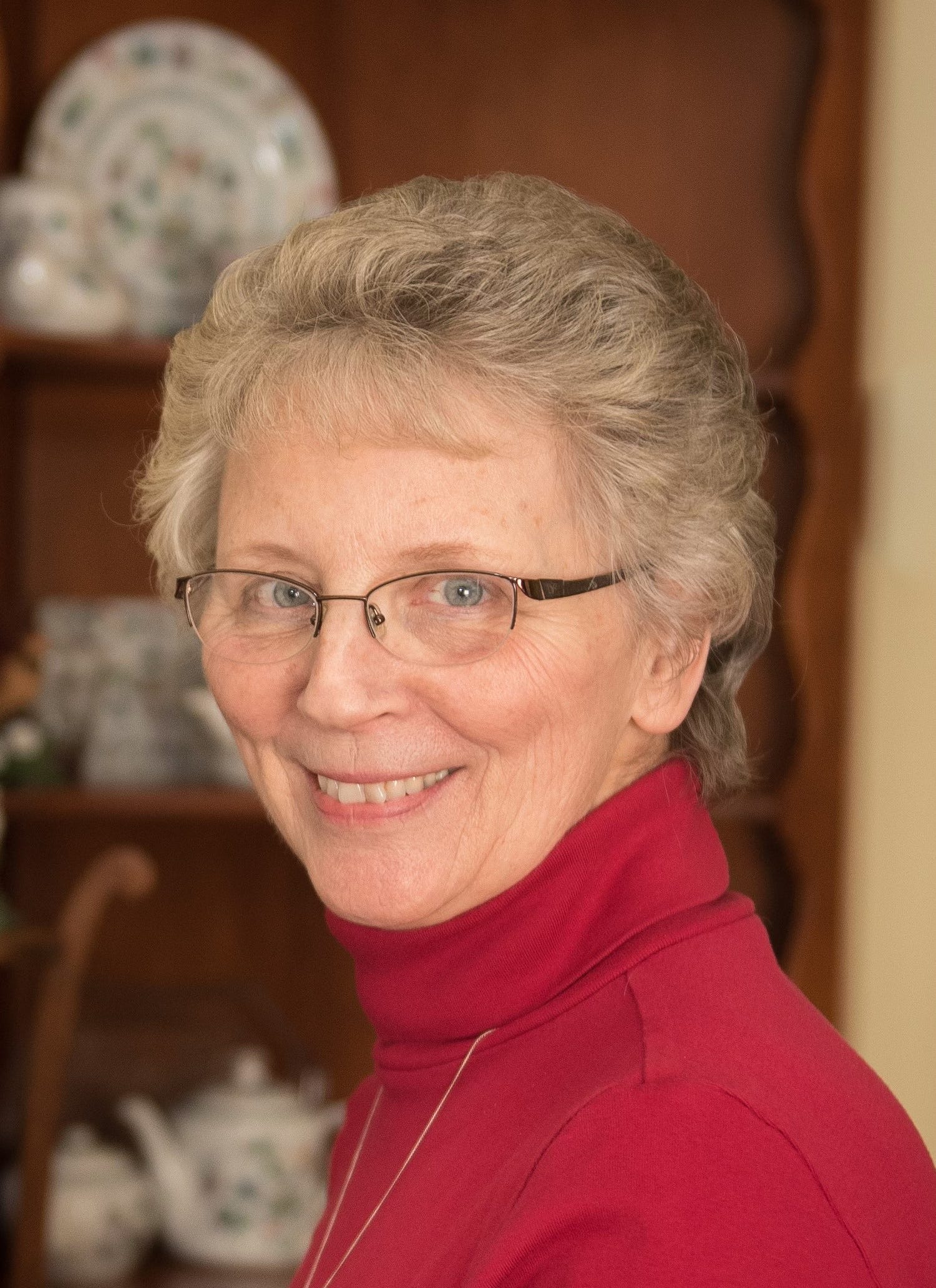
MaryAnne Brown, RN, BSN, MA is a music minister at St. Joseph’s Church and has a special interest in spirituality and health. She serves on the Retreat Team at Dominican Retreat and Conference Center in Niskayuna and provides grant writing services.
Event Today
And Now for the Comics … ‘9 to 5’ by Harley Schwadron

More tomorrow!
Thanks, MaryAnne!,
We sure could use some "Empathy Hours" for our children, and for adults, too.
I think that's why I'm interested in the area's Sunday church services in Greenwich. The low attendance suggests there could be a problem within our society. But there are communities across the country centered around mega-churches where congregations reach numbers in the thousands... and yet, our country feels more divided, hostile, and lacking empathy for human beings with different life experiences and beliefs than ours.
The message from some of our political leaders is that "empathy" is for the weak. In a society where that is the message coming from the top, we here at the bottom, on the ground, definitely need to find spaces to meet where we all acknowledge each other as fellow human beings.
(Some sense of "hygge" would be nice as well.)
Anyways, always great to read what's been on your mind!