

An Interview With Matt Chinian
And Greenwich Town Board Coverage, Police Blotter

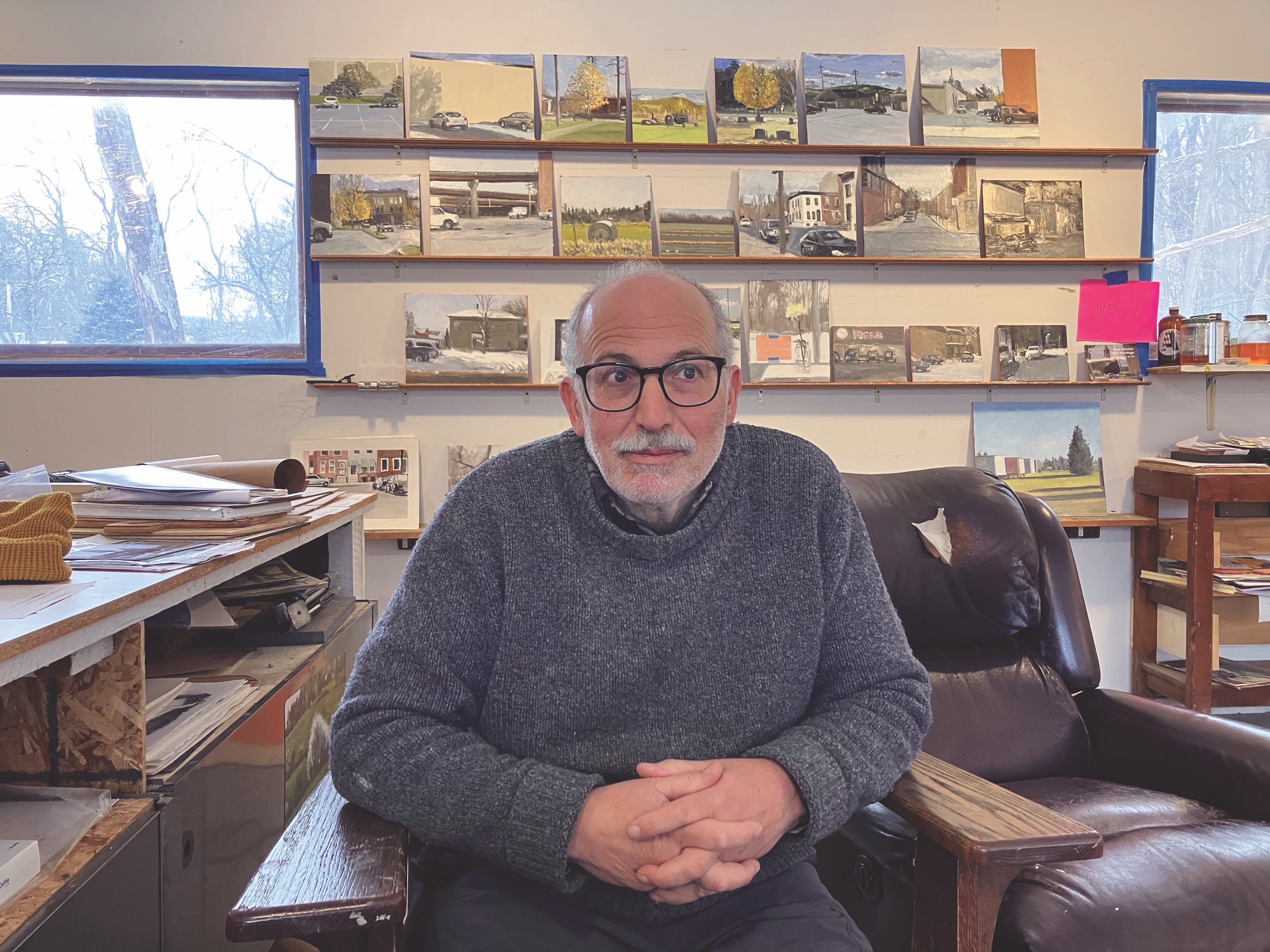
By Elizabeth Karp
Journal & Press
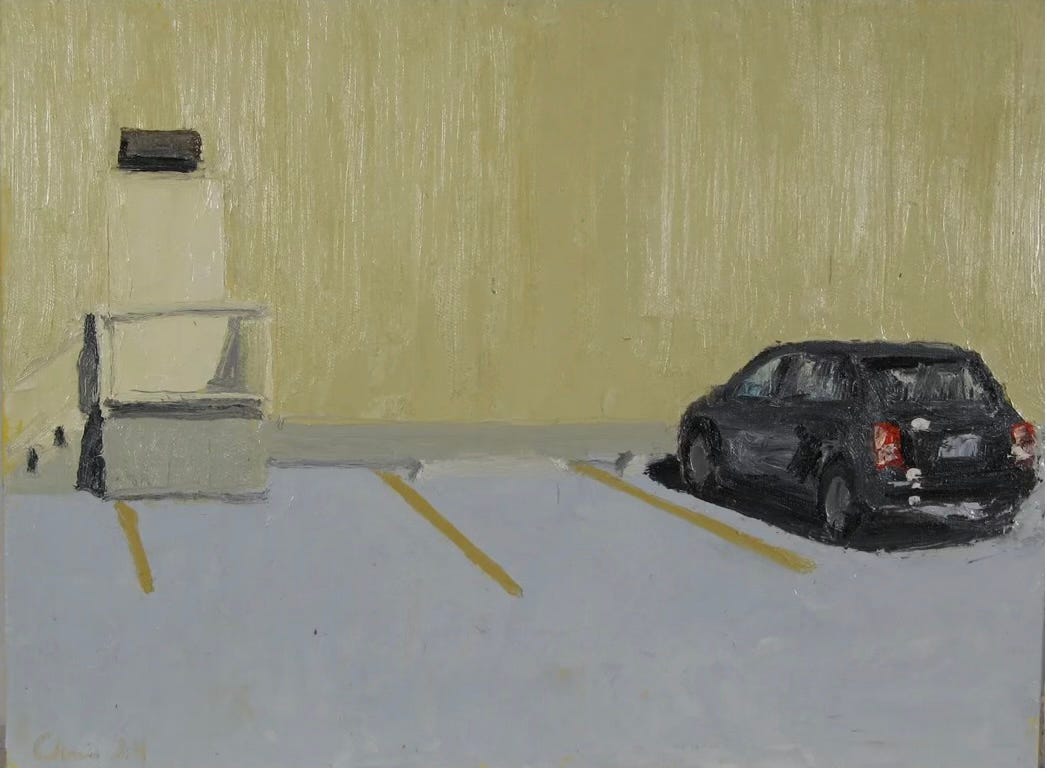
Matt Chinian turned to painting full-time in 2010 after a career as a carpenter. Chinian deftly paints captivating and compelling slices-of-life scenes that hold space and time and light just right. Here are excerpts from my interview with the artist at his studio in Cambridge, NY, on January 5, 2026.
EK: How have your life experiences influenced your style?
MC: I think working as a carpenter did quite a lot. My perspective is kind of from a workman, as a workman kind of way, and there’s a certain mindset to that. Waking up in the morning, putting your boots on and going out there and working. I love that! It’s very fun and exciting for me to do. And it is a daily thing, a daily practice.
EK: Who are your biggest influences, artistic, or otherwise?
MC: Well, I guess the obvious is, like Edward Hopper, and Winslow Homer, John Singer Sargent. Those guys, you know. But a lot of others as well. I love the abstract expressionists. Joan Mitchell was an amazing painter. Giorgio de Chirico was an amazing painter. Philip Guston. Mark Rothko. They charted territory and they had their thing. Everybody’s life is different, and that’s what you’re getting with me. It’s a different life.
EK: What role does art play in society, in your view?
MC: It would be nice to think that art is something that is available to everyone and everybody can experience it in their own way. I think our society puts a huge hierarchy on what’s valuable. It’s probably a common understanding that some people look at art, like an elitist occupation, and something that is only available to those with leisure, which may be slightly true, but it really shouldn’t be. It can and should be part of everybody’s life in one way or another. Talking about art, broadly speaking, certain venues are just crazy. It’s become a financial speculation for some things, and nobody seems to like that, but there it is, right? It doesn’t stop it. It still gets money. But I think if you sort of move around the world, you see really that art is being made by different people in different places all the time.
EK: Yes, and they don’t have to just exist in the city centers.
MC: Oh, yeah, absolutely not.
EK: What is the most significant lesson you’ve learned as an artist?
MC: I think it’s when you make something, don’t judge it immediately, and don’t judge it definitively. Time and consideration might change your mind about your own work as well as the work of others. I paint. I paint often, and oftentimes, I’ll be like, oh, I hate this. This is the dumbest thing I’ve ever done. I’m actually good at not just scraping it off or throwing it out. Most of the times, I think about it later, and look at it later, and see what the hell I was doing, and come back to it. Try to understand it. That’s the most valuable thing. It comes with time going by, so you gotta be kind of old. The more time goes by, the more time you have to consider things, and not be so judgmental, because it’s not about judging, it’s about just understanding. I think it’s important to say, I’m gonna think about this for a while, turn it over in your head, consider it from different angles. All of those things take time.
EK: Good advice to any artists who are starting out.
MC: Just keep making art, and don’t be quick to judge. It’s very easy to be quick to judge, and we’ve seen that the ramifications from that have just been devastating to our society, and everybody everywhere needs to think things through a little bit more clearly and give things more time. I wouldn’t have been able to say that when I was 20 or 30 or 40 even. It’s different when you’ve had time to see things happen.
EK: We’re lucky to have that perspective.
MC: I’m still living. {Laughter} I’m still alive.
EK: What are you working on currently?
MC: I’m working on the saw, which is probably the third or fourth time I painted the saw. I just need to move some paint around. Sometimes I go out not knowing what I’m going to paint. I’m kind of a diarist, a journalist for paint. Every day is like, oh, what’s today’s entry for the journal? And it fits into the whole, and it all informs itself. The parameters of the way I work are very much from life. It’s a visual thing. It’s not fantasy. It’s realism. Those things are the things I’ve really stuck to. I enjoy all the aspects of it, making panels, there’s a lot that has to be done. It’s still four or five hours of actual stuff to do, getting out there and finding. All those parts are important, and they’re not really seen. It’s very much part of the way they get produced, the way they come into being.
EK: The composition, palette, how you handle light, and your choices. You’re sampling our world and sharing your diary entries with us. We’re getting a window into the inside of your brain.
MC: Right. Or the outside, really. I am kind of a photographer in a lot of ways. It really is a lot about photography. It’s not, but it is. I’m following Stephen Shore and Michael Bach. There’s a number of photographers out there that do kind of spiritually similar things that I do. So, that’s kind of fun.
EK: Where can folks see your work?
MC: mattchinian.com , Instagram and Facebook.
Elizabeth Karp is an artist and curator who lives in Salem, NY.
Below the paywall are Police Blotter, Greenwich Town Board coverage and the comics…
